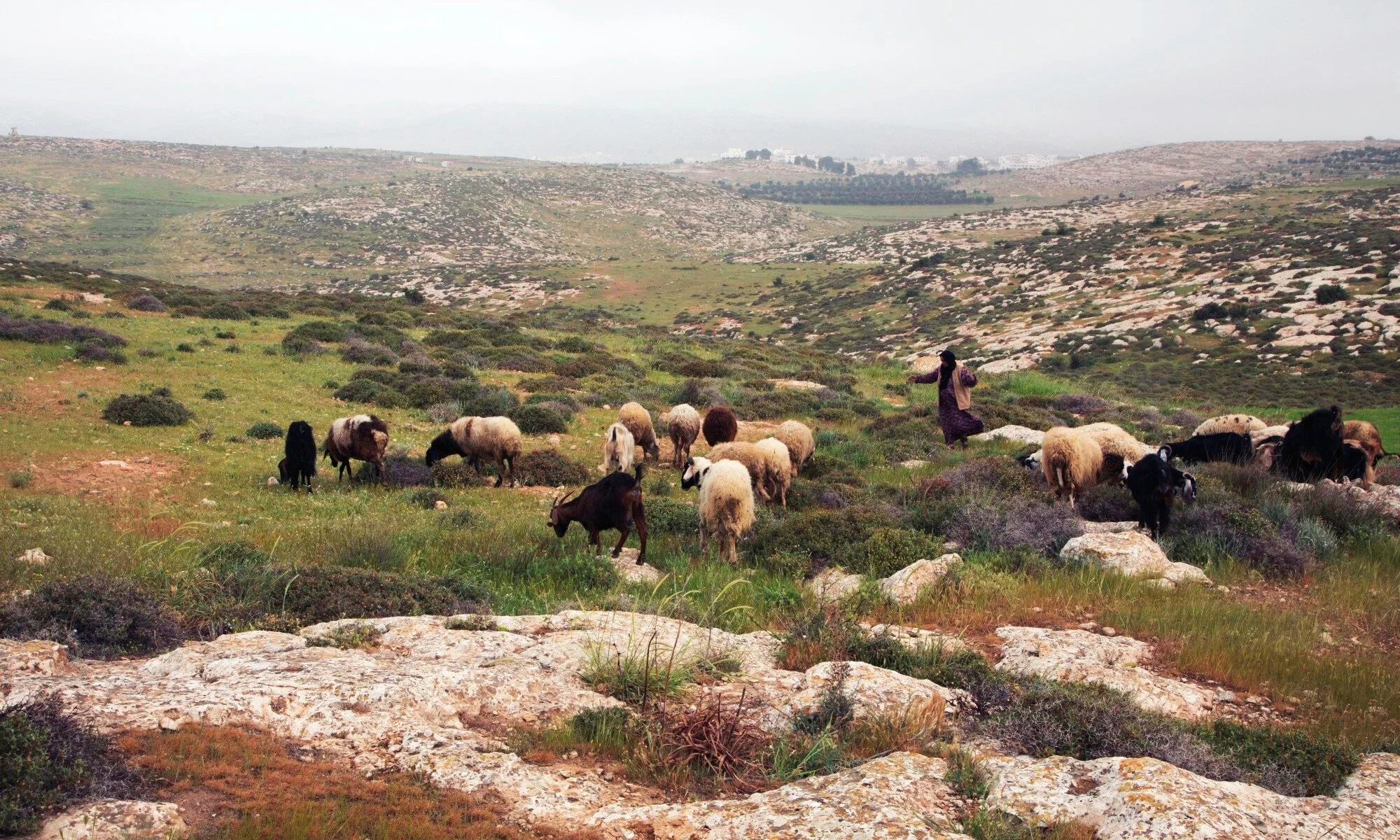

olives & sheep
olives & sheep is a new cartographic platform putting citizen journalism and archival materials directly on the map of Palestine, starting with a particular focus on food sovereignty and displacement from agricultural zones in the West Bank. Our geographic data comes from local residents and activists with boots on the ground, as well as from international researchers with deep awareness and respect for the multiple perspectives, narratives, and realities in the Holy Land from ancient history through today.
olives & sheep is a living map that fosters connections between people and nature, prioritizing indigenous ways of life and traditional practices. We aim to preserve and promote joyous land-based knowledge so that all can continue to thrive symbiotically as we have for millennia. Our mission is to highlight and amplify images and stories erased from mainstream maps, linking media data points to specific geographic locations to create a more inclusive alternative cartography of Palestine, which certain includes Jerusalem, the West Bank, 1948 and Gaza.
olives & sheep are symbols and seeds nurturing viable futures in Historic Palestine, cultivating dignity and freedom for every living being from every river to every sea.
Who we are: olives & sheep was founded and is creative-directed by an art-oriented researcher currently based in New York. The platform is developed technically by an experienced map builder based in the UK, with help along the way from a few brilliant interns— undergraduates and recent graduates looking to make an impact in social justice tech. We warmly welcome volunteers, interns, activists, academics and researchers with valuable content, insights, stories and skills to share! We are intentionally multi-disciplinary and our identities are diverse— in the spirit of Historic Palestine.
So far, much of the content on the olives & sheep prototype has come from the founder’s social media feed and her own research. We credit and link to clickable sources on the map. The platform currently needs to be better curated by a team of Palestinian contributing editors and researchers— we are looking to expand this team now.